Leaks or stains at the roof edge
Repair may address joints, end caps or outlets.

Service selection
Leaking joint, clogged gutter or a whole system ready for replacement? Find the service that fits the problem. Compare repair, cleaning, installation and other gutter work for your Mishawaka-area property.

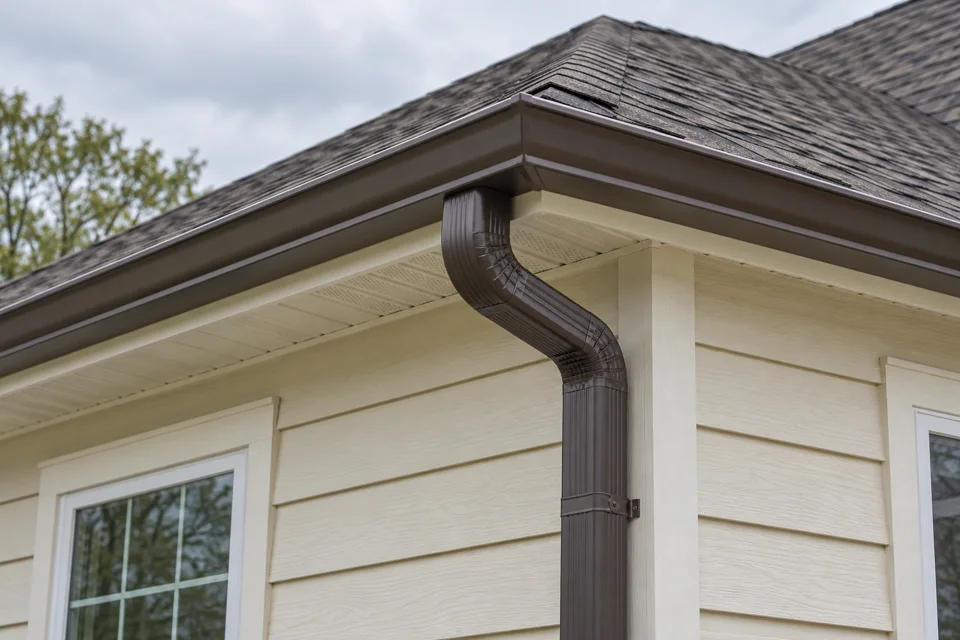
Plan channels, outlets, downspouts and material choices for a new gutter system.
Plan a replacement around system condition, removal findings, downspouts and a clear line-item estimate.
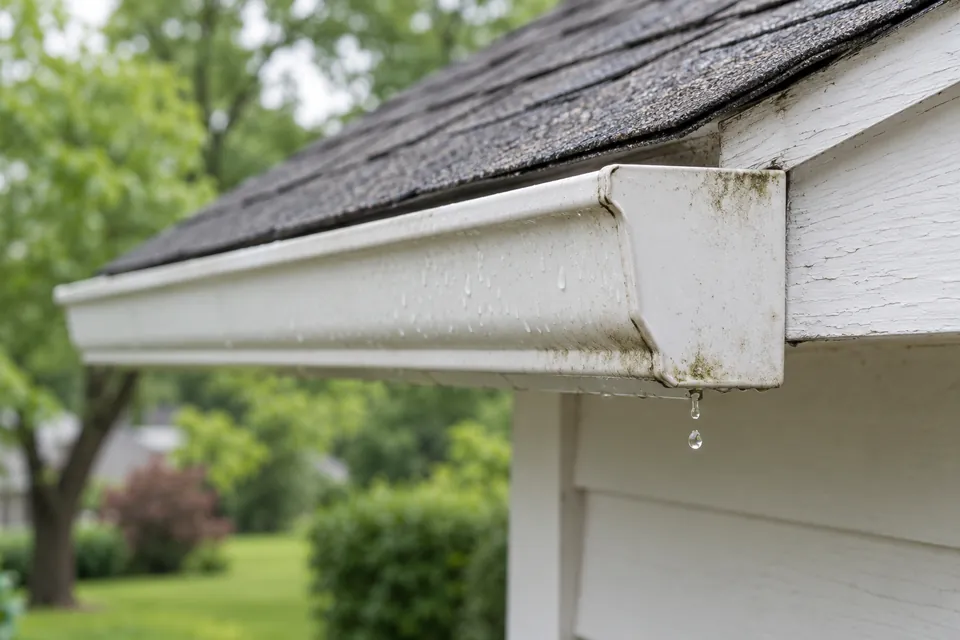
Repair leaks, detached sections and local damage, or learn when wider replacement should be discussed.
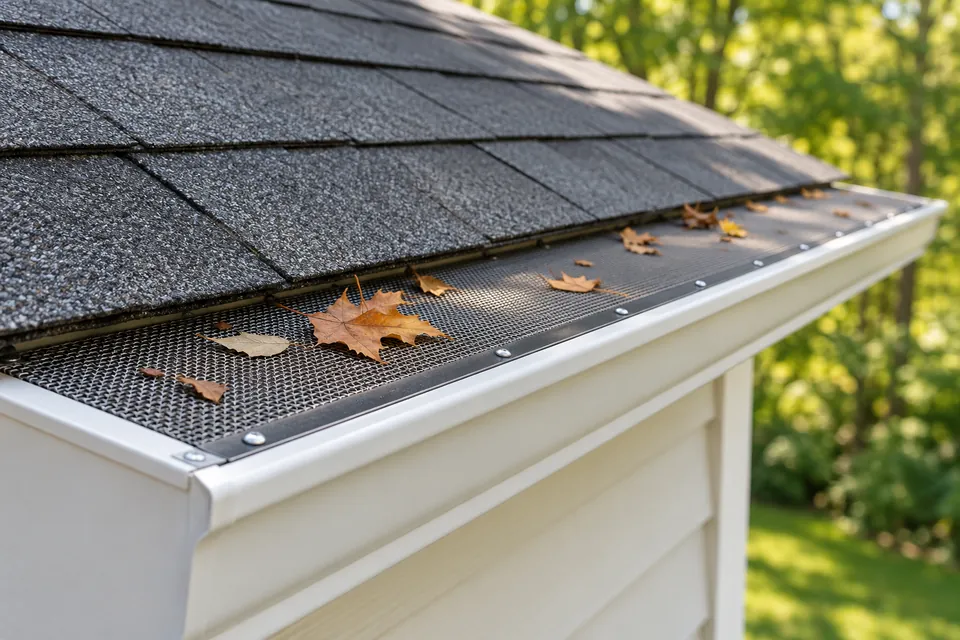
Compare gutter guard suitability by roof material, debris, access and maintenance needs.
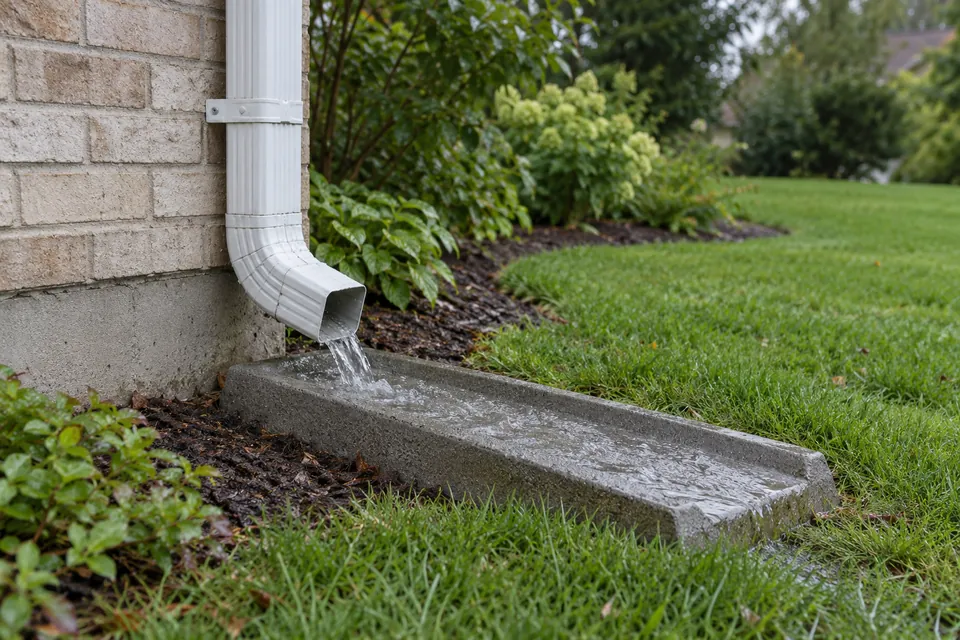
Plan downspout routing, extensions and discharge points for your gutter system.

Cleaning removes debris and checks flow through gutters, outlets and downspouts.
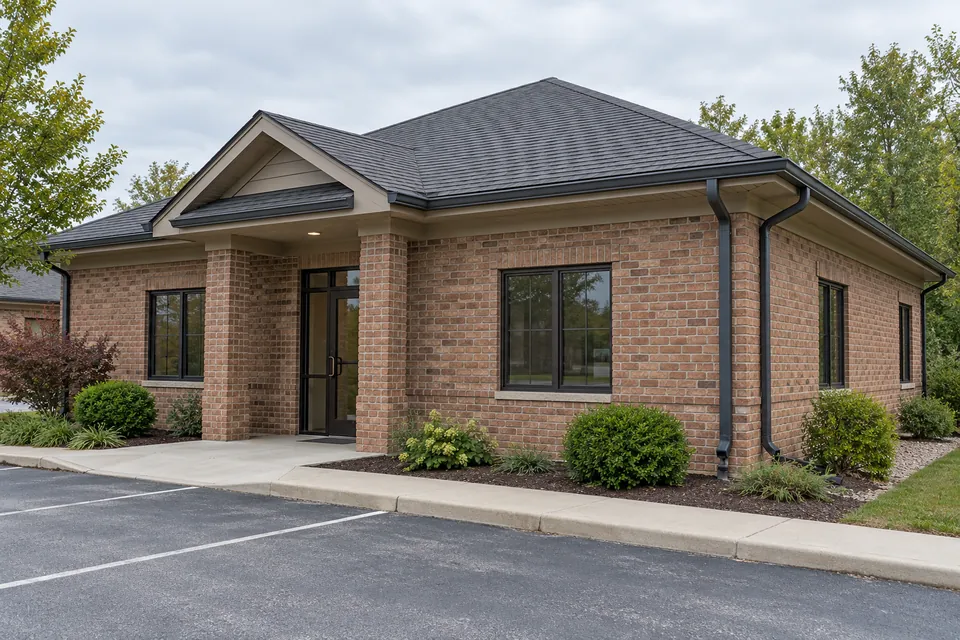
Assess commercial gutters, outlets, downspouts, access and discharge for small buildings.
Gutters collect rainwater along the roof edge. Outlets are the openings into the downspouts, which carry it toward a suitable place to drain. A problem at any stage can affect the next.
A clear but undersized gutter may still overflow. A large gutter can still struggle if an outlet is blocked or its supports are loose. Choose the service around the cause, not just the visible symptom.
Match the symptom to the closest service below. An on-site check can confirm the cause, especially when the same symptom could come from several parts of the system.
Repair may address joints, end caps or outlets.
Repair or replacement depends on how widespread the movement is.
Cleaning, outlet capacity, downspout routing or system size may all matter.
Cleaning and guards are both worth comparing.
Suitability depends on roof material, debris type and access.
Routing, extensions and outlets are the focus.
Start with the roofline, layout and any existing gutters to remove.
Condition matters more than age alone. Compare how much of the system is affected, what can be reused and what the proposed work will fix.
| Situation | Often starts with | What shapes the decision |
|---|---|---|
| Isolated leak or loose fitting | Repair | Access, condition of nearby sections and whether the cause is local |
| Repeated problems along one run | Repair or replacement | How many sections are affected and whether fastening points are sound |
| Sagging, widespread damage or mixed materials | Replacement | Removal findings, new layout and whether downspouts can be reused |
| Seasonal debris and slow drainage | Cleaning or guards | Debris type, roof material and how often maintenance can be done |
| New roof edge or full system change | Installation | Roof runoff, outlet layout, downspout routing and disposal |
Swipe across the table to compare all columns →
For a drainage connection or permit question, use the office responsible for the property address. For materials, price and repair choices, use the matching guide.
Start with where the problem appears and how much of the system is affected. A single leak or loose fitting often points to repair, while repeated failures, widespread movement or capacity concerns can make replacement the more useful conversation.
Yes. Observe from ground level and note where water appears, which sections look loose and how the downspouts discharge. Gather photos only if you can do so safely from the ground.
Not necessarily. Gutters and downspouts move roof runoff, but basement moisture can involve grading, foundation drainage and other site conditions. Gutter work is one part of the water path.
Ask for removal, disposal, material, hangers, outlets, downspouts, cleanup, inclusions and exclusions to be listed. Then compare the same items across estimates.