
Overflow guide
Overflowing gutters: causes and checks
Water spilling over the gutter does not always mean you need a bigger one. Leaves, a blocked outlet, poor slope or limited capacity can produce similar symptoms. Note where overflow starts before choosing cleaning, repair or replacement.
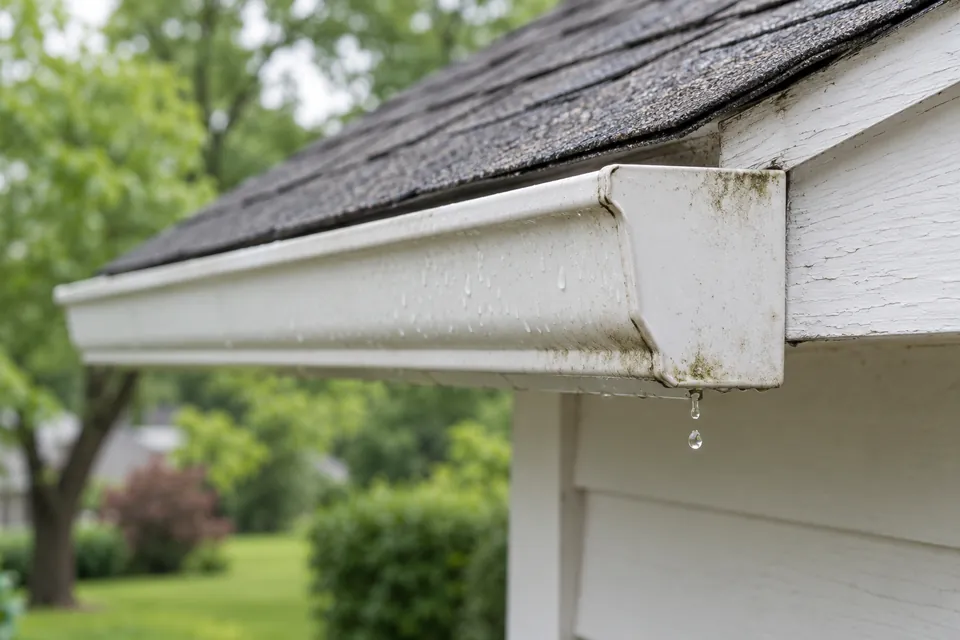
Note where the water starts spilling
Observe from a safe position on the ground during rain. Note whether water spills at one corner, along a section or across several runs, and whether the downspouts are draining.
You do not need to climb a ladder or diagnose the fault. A description of a repeated pattern gives an assessor a more useful starting point than one splash.
Debris blockage
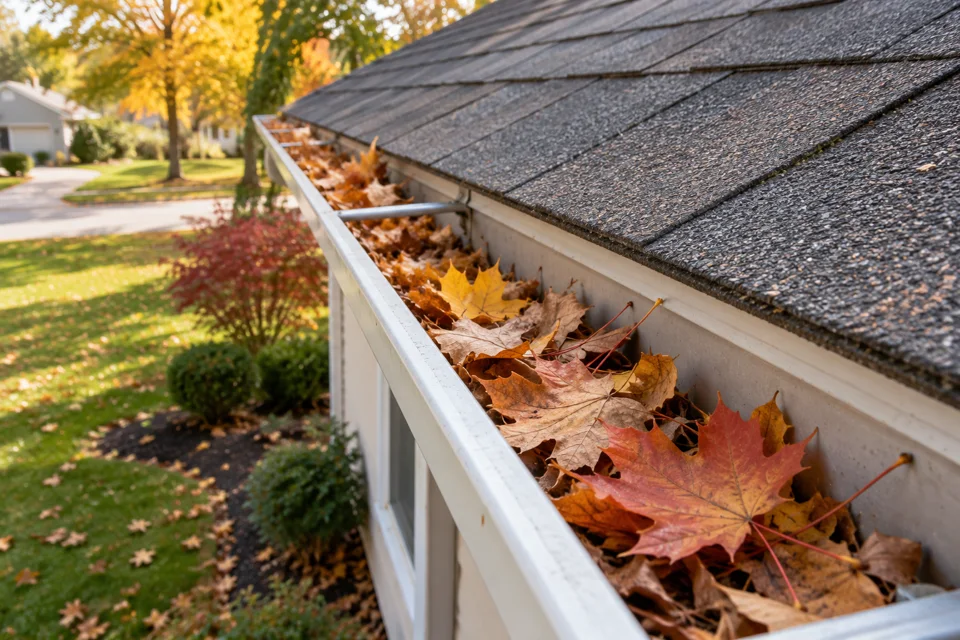
Debris can slow the channel or block the opening into a downspout. Look for visible buildup and note whether overflow follows a period of leaf fall.
- Leaves, twigs or shingle granules collecting near an outlet
- A mat of debris along the channel that slows flow
- Blockage at a downspout opening or elbow
- Overflow that changes after a windy or leafy period
Capacity and roof area
Large roof areas and valleys can send a high volume of water toward one gutter section. Capacity is the amount the gutter and its outlets can carry.
Check gutter size, outlet openings and downspouts together. A measurement of the channel alone will not show whether water can leave it fast enough.
- Roof plane
- Valley
- Concentrated flow
- Gutter channel
- Outlet
- Downspout
- Discharge point
- RoofCollecting area
and valleys - GutterChannel, slope
and outlets - DownspoutCapacity
and routing - DischargeA suitable
destination
Gutter slope and loose supports
A gutter needs to slope toward its outlets. A low spot, a section sloping the wrong way or a loose support can leave water standing or spilling over the edge.
A repair may correct a local slope or attachment problem. If several sections are affected, compare the condition of the whole run.
Outlets and downspouts
Water needs a clear path through the outlet, downspout and any connected drainage pipe. A restriction in that path can slow drainage or back water up.
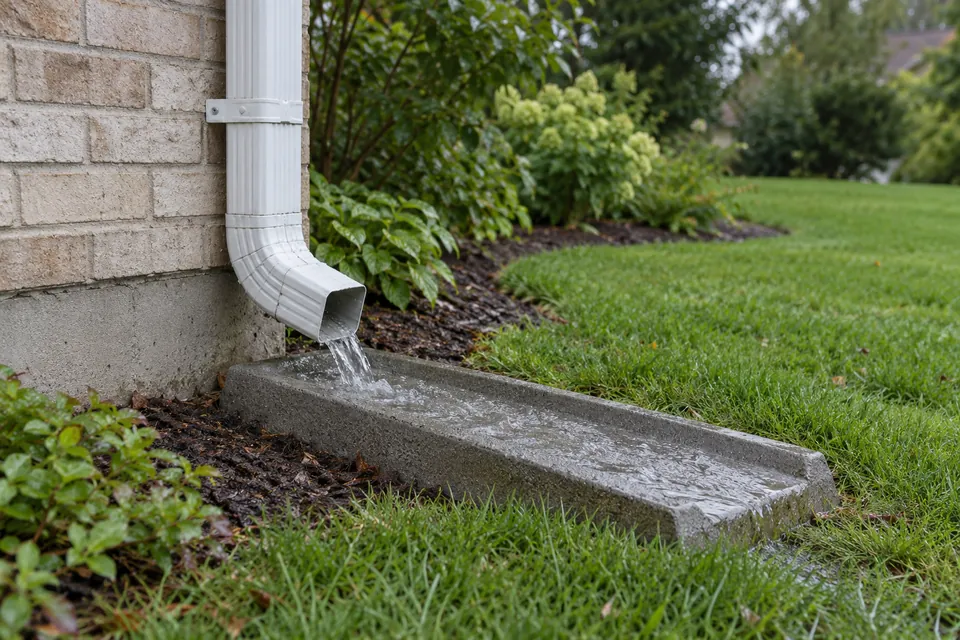
A detached extension can send water to the wrong place without causing a blockage. If water leaves the gutter but pools beside the house, check where the downspout ends.
- Gutter outlet
- Downspout
- Elbow
- Extension
- Discharge area
- Site drainage
- RoofCollecting area
and valleys - GutterChannel, slope
and outlets - DownspoutCapacity
and routing - DischargeA suitable
destination
When to arrange an assessment
Arrange an assessment when overflow keeps returning, cleaning has not resolved it or you see stains, erosion or damage near the roof edge. Record:
- Overflow returns in similar rain events
- Water reaches siding, fascia or foundation
- Downspouts cannot keep up
- Debris removal did not resolve it
- You are unsure whether repair, cleaning or sizing is the issue
Common questions
Can I tell if the gutter is undersized from the ground?
Not reliably. Ground observation can show where overflow starts and whether it tracks with heavy rain, debris or a specific roof area. Capacity is among several assessment questions.
Does overflow always mean the gutter needs replacing?
No. Debris, alignment, outlet restrictions and local damage can all cause similar symptoms. A repair or cleaning may be appropriate in some cases, but the cause should be identified first.
What should I note during a rainstorm?
Watch from a safe ground position. Note the overflow location, whether it repeats, how downspouts discharge, and whether water reaches siding, fascia or the foundation.