
Replacement planning
Gutter replacement in Mishawaka
Tired of recurring leaks or sagging gutters? Replacement can address worn sections, weak attachments and an awkward downspout layout together. See what a complete replacement should include before comparing estimates for your Mishawaka home.

When replacement is the practical answer
Consider replacement when damage is widespread, leaks keep returning or the existing layout no longer handles the roof runoff. The goal is to address the cause across the affected system.
For one leaking joint or loose section, compare a focused repair first. Replacement deserves a closer look when several sections or attachment points are affected.
What removal can reveal
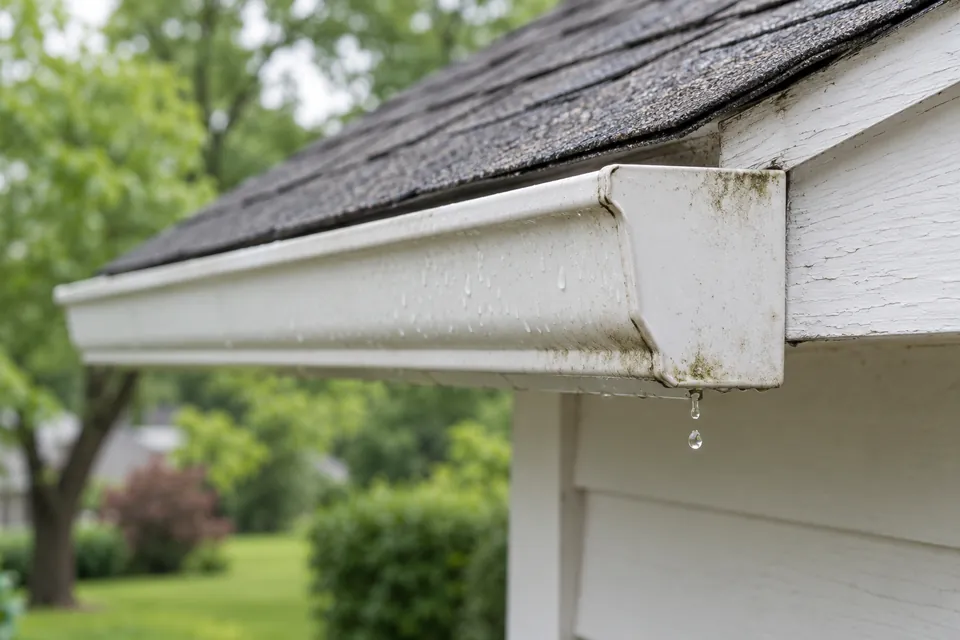
Removing old gutters can expose damaged fascia—the board behind the gutter—or weak fixing points. Ask how these findings will be documented, priced and approved before additional work proceeds.
- Fascia condition where hangers attach.
- Existing hanger spacing, fastening and attachment points.
- Outlet, end-cap and corner condition.
- Transitions between runs and downspout connections.
- Surfaces needing repair or preparation before the new gutters are fitted.
Comparing replacement estimates
A complete price is easier to judge when it shows what you are paying for. Compare the same line items in each written estimate.
| Line item | Why it matters | What to ask |
|---|---|---|
| Removal | Old material must come down before installation. | Is removal included, and how is access handled? |
| Disposal | Hauling and dump fees can appear separately. | Are disposal and cleanup included? |
| Material | Aluminum, steel and other options behave differently. | What material is proposed, and why is it suited here? |
| Hangers | Fastening affects how the system handles weight and movement. | How are hangers attached, and what condition must the fascia be in? |
| Outlets | Outlets move water from the channel into downspouts. | How many outlets are included, and where will they sit? |
| Downspouts | Routing and capacity affect where water leaves the roof. | Are downspouts new, reused or extended? |
| Cleanup | Debris and metal scraps should not be left behind. | What cleanup is included at the end of the job? |
Swipe across the table to compare all columns →
Reusing existing downspouts or outlets
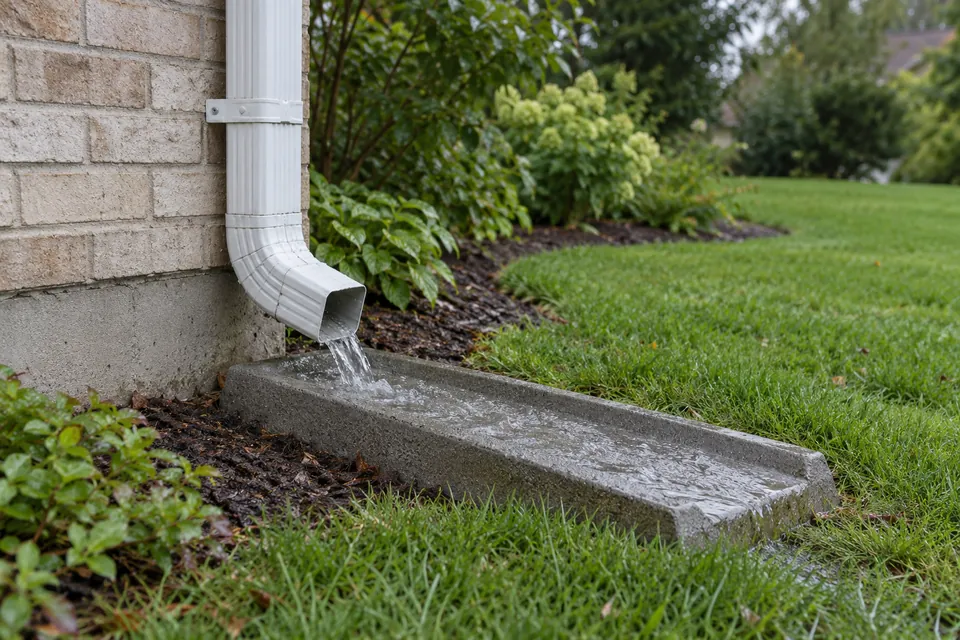
Sound downspouts may be reusable if they fit the new outlets and can handle the water. Ask the estimate to identify which outlets, elbows and connections will stay and which will change.
Check the discharge route too. Reusing a pipe does not establish that an existing drainage connection is suitable for the property.
How replacement differs from repair
Repair targets an isolated fault. Replacement can change the gutter layout, supporting parts and outlets together when problems affect more of the system.
| Situation | Repair path | Replacement path |
|---|---|---|
| One joint leaks | Reseal or adjust the joint and check nearby fasteners. | Usually not needed unless surrounding sections are also failing. |
| One section is detached | Reattach and assess why it moved. | Consider replacement if hangers, fascia or multiple sections are affected. |
| Several runs sag or leak | Repairs may become repeated short-term work. | Replacement can address layout, fastening and outlet placement together. |
| Overflow happens in normal rain | Cleaning or outlet work may help first. | Capacity and downspout routing may point to a different system plan. |
| Old repairs are mixed together | Repair only the active problem if the rest is sound. | Replacement can reset the system with consistent parts and attachments. |
Swipe across the table to compare all columns →
What to prepare for a replacement estimate
Good information helps compare estimates without guessing. Keep it simple and safe.
- Gather ground-level photos of the roof edge, gutter runs, outlets and downspouts for later conversations.
- Note known dimensions, approximate run lengths and stories if you have them.
- List access constraints such as gates, landscaping, steep grade or parked vehicles.
- Collect prior repair notes or receipts if they explain what was done before.
- Ask for itemized inclusions and exclusions before deciding between estimates.
Common questions
Does replacement always include new downspouts?
Not always. Existing downspouts may be reused if they are sound, properly sized and routed to a suitable discharge point. Ask for downspouts and outlets to be listed separately so you can see what is included.
What if fascia damage is found after removal?
Fascia condition can affect how hangers attach. If hidden damage is found, it becomes a work item to discuss before installation continues. Ask how the estimate handles unforeseen fascia repairs.
How can I compare replacement estimates fairly?
Ask each estimate to list removal, disposal, material, hangers, outlets, downspouts and cleanup. Then compare the same categories and note any exclusions.
Can I get an estimate without roof access?
You can start with a description and ground-level observations. A final scope may still require safe access to measure runs, confirm attachment points and check outlets.