
Downspouts & outlets
Downspout repair & routing in Mishawaka
Water should leave your downspouts in a suitable place—not collect beside your house or across a walkway. Compare repairs, extensions and routing changes for your Mishawaka property, from the gutter outlet to where the water exits.
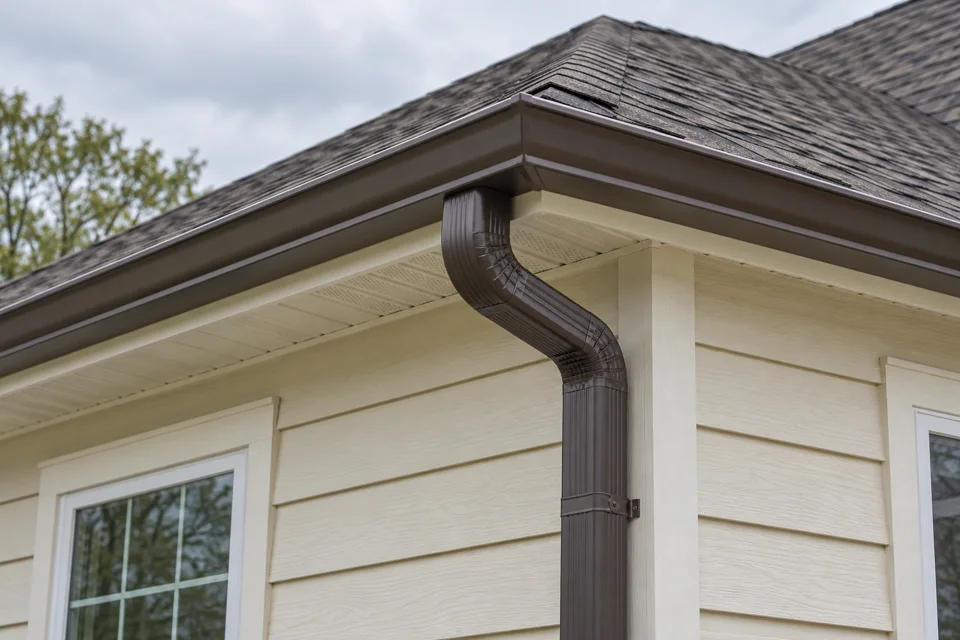
Outlets and downspout routing
The outlet is the opening from the gutter into the downspout. Elbows change the pipe’s direction; an extension can carry water farther from the building.
Outlet size, pipe size and the route to the discharge point affect how much water can leave the roof.
- Outlet — the opening that joins the gutter to a downspout.
- Elbow — a fitting that changes the pipe’s direction.
- Downspout — the pipe carrying roof water down the wall.
- Extension — a piece that carries water farther from the building.
- Discharge point — the place where water leaves the system.
- RoofCollecting area
and valleys - GutterChannel, slope
and outlets - DownspoutCapacity
and routing - DischargeA suitable
destination
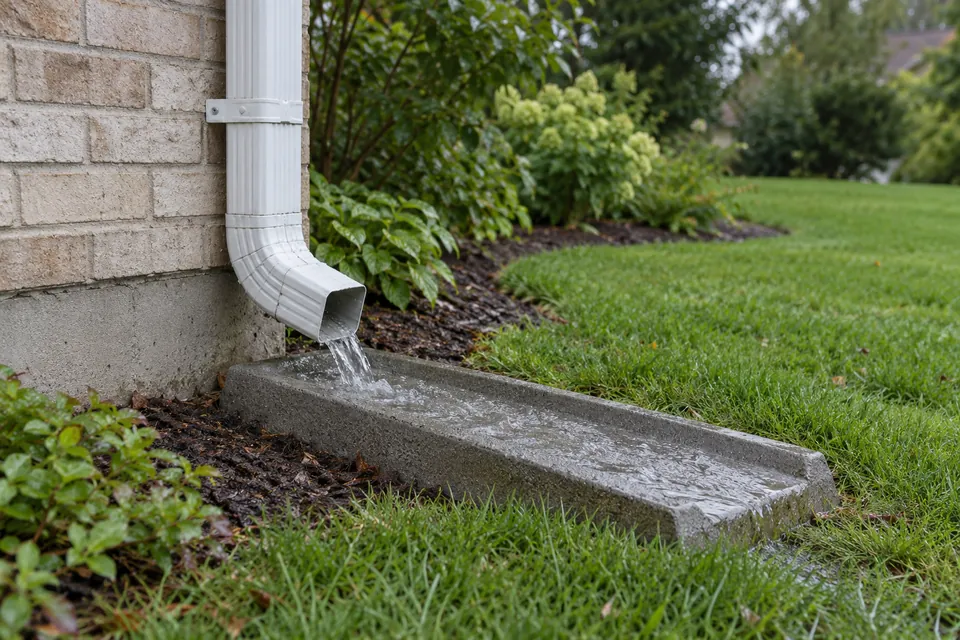
Extensions and suitable discharge
An extension or splash block may help direct water away from a troublesome spot. The right destination depends on the slope of the ground, nearby paths, property boundaries and any approved drainage connection.
If moisture remains around the foundation, the ground slope, soil and foundation drainage may need separate attention. Moving roof water is one part of that assessment.
When underground drainage needs a separate plan
- Gutter and downspout work covers the visible path from the roof edge to the discharge point.
- Buried pipes, excavation and French drains need their own assessment and price.
- For stormwater connections, check the office responsible for the property address.
Repair a fitting or change the layout?
An isolated leak may need a fitting repaired. Repeated overflow or water collecting in the wrong place may call for a different outlet, downspout or extension layout.
| Observation | What it may mean | Useful next step |
|---|---|---|
| Water leaks at joints | Loose connection, worn seal or movement | Assess repair versus replacement of that section |
| Downspout detached from outlet | Failed connection or impact damage | Review attachment and outlet condition |
| Overflow during heavy rain | Debris, restricted outlet or capacity limits | Check flow path and consider capacity |
| Water pools near foundation | Discharge point too close or poorly directed | Review extension and discharge location |
Swipe across the table to compare all columns →
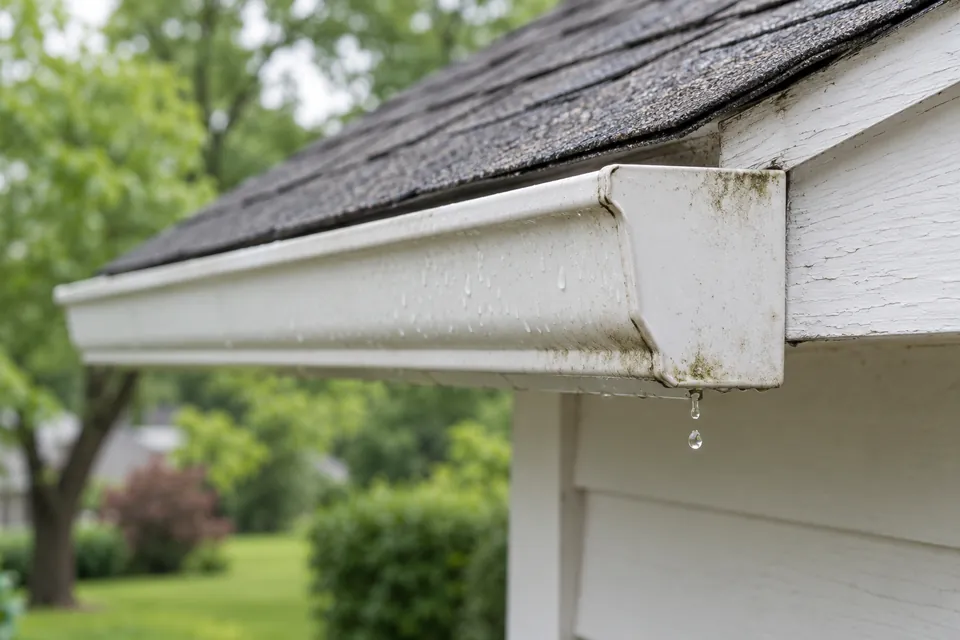
Preparing for downspout work
- Gather photos of the outlet, downspout path, extension and discharge area for your own reference.
- Note property boundaries, walkways, driveways and planting beds near the discharge point.
- Describe any overflow, leaks or erosion you see from ground level.
- List questions about buried drainage or local stormwater rules separately from gutter work.
Common questions
Will an extension solve water collecting beside the house?
It may help when roof water is ending too close to the wall. Check where the extension will send it; ground slope, soil and foundation drainage can also contribute to moisture.
What is the difference between a downspout and buried drainage?
A downspout is the visible vertical pipe. Buried drainage, French drains and excavation are separate work that may need a different investigation.
When should a downspout be repaired rather than replaced?
If the issue is a local leak, loose joint or detached section, repair may be enough. Widespread damage, poor routing or capacity concerns may point to replacement or redesign.