
GUTTER INSTALLATION
Gutter installation in Mishawaka
New gutters should do more than finish the roofline. A well-planned system collects rainwater and carries it away from your home. Compare seamless and sectional options, materials and downspout layouts for your Mishawaka property.

What a complete gutter system includes
A complete installation connects the roof edge to a suitable place for rainwater to drain. Check that the proposal includes the supporting parts as well as the visible gutter.
- Gutter channels collect water along the roof edge.
- Outlets are openings that feed water into downspouts.
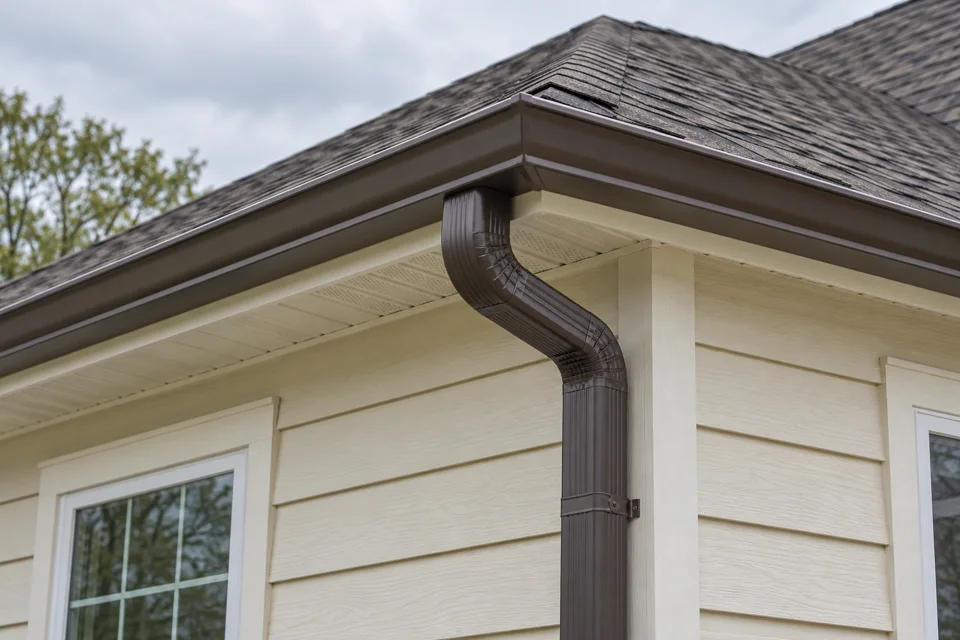
- Downspouts and elbows carry water down the wall and change its direction.
- Hangers are brackets that support the gutter.
- Corners and end caps join or close the channel.
Measuring the roofline and roof area
Gutter length tells you how much channel is needed. Roof area and valleys help explain how much water reaches it. A valley can concentrate runoff into one part of the gutter.
Plan gutter size, outlet placement and downspouts together. More channel capacity helps only if water can leave it efficiently.
Material, profile and size choices
Material affects the look, finish and supporting parts. Compare aluminum, copper, steel and vinyl alongside the shape of the gutter—often called its profile.
Seamless gutters use lengths formed to fit the run; sectional gutters join shorter pieces. K-style has a decorative front, while half-round has a curved shape.
| Option | What to compare |
|---|---|
| Aluminum | Compare painted finishes, color and thickness. |
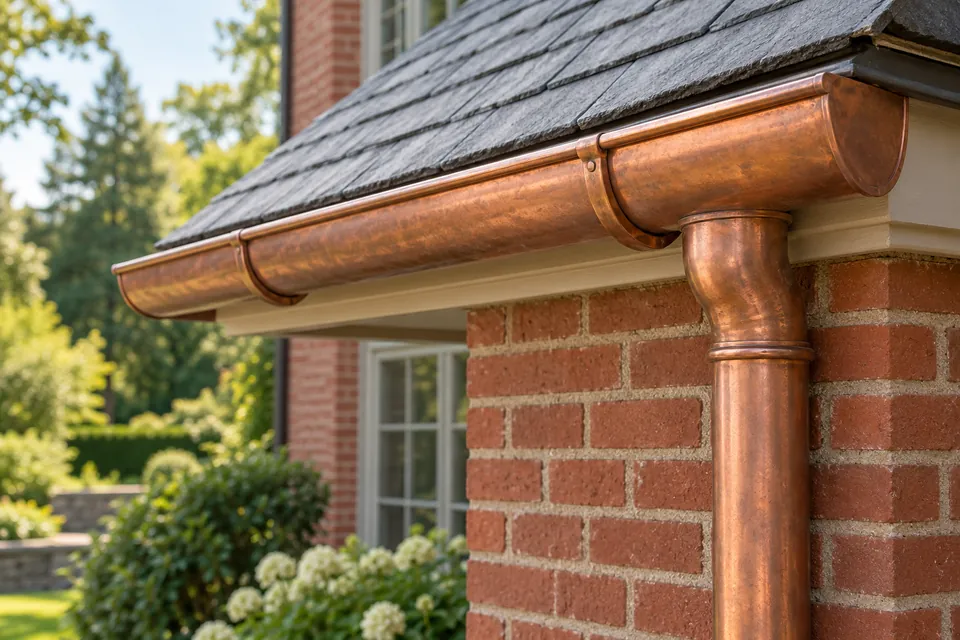
| Copper | Compare its distinctive appearance, finish expectations and budget. |
| Steel | Ask about coating, weight and supporting parts. |
| Vinyl | Compare the profile, connections and product suitability for the property. |
| Seamless | Formed to length, with fewer joints along each run. |
| Sectional | Joined pieces, with connections included in the design. |
| K-style | A decorative front that changes the look along the roofline. |
| Half-round | A rounded profile with matching hangers and outlets. |
Outlets, downspouts and discharge planning
Plan where the downspouts will end before deciding where the outlets go. Keep doors, walkways and the foundation in mind.
An existing buried line or utility connection needs to be checked before it is reused. Address-specific stormwater rules may affect the route.
- Identify low or concentrated flow points along the roofline.
- Place outlets where water can enter a downspout efficiently.
- Route downspouts along walls without blocking access.
- Extend discharge to a suitable point away from the foundation.
- Confirm local stormwater or connection rules for the address.
- RoofCollecting area
and valleys - GutterChannel, slope
and outlets - DownspoutCapacity
and routing - DischargeA suitable
destination
What to prepare for an installation estimate
Start with what you can describe from the ground. You do not need exact dimensions or roof access to make useful project notes.
Ask for a written list of included work, removal and cleanup so the estimate is easy to compare.
- Take ground-level photos of the roofline, gutters, outlets and downspouts.
- Note approximate dimensions if you already know them.
- Describe access conditions such as gates, slopes or obstacles.
- List material, profile or size questions you want addressed.
- Ask for an itemized list of work, cleanup details and what may change after assessment.
What could change the estimate?
Some conditions become clear only during an on-site check or removal of old gutters. Ask how extra work will be priced and approved.
The fascia—the board behind the gutter—is one example. If it is damaged, it may need repair before new hangers can be attached.
- Fascia condition or rot behind the gutter.
- Roof complexity, steepness or valley concentration.
- Hidden hanger or fastening issues.
- Outlet changes needed for better flow.
- Separate buried drainage or discharge work.
Common questions
How do I know what gutter size I need?
The size needs to suit the roof area and concentrated flow from valleys, with outlets and downspouts able to drain it. Describe any overflow and have the layout assessed before choosing.
Do I need exact measurements before asking about installation?
No. Start with the building type, number of stories and the work you want done. Use dimensions only if you already know them; measurements and attachment conditions can be checked at the property.
Are downspouts included in a gutter installation price?
Ask for them to be listed. A complete water path needs outlets and downspouts, but the quote should specify their number, routing and any extensions or separate drainage work.
What is the difference between seamless and sectional gutters?
Seamless channels are formed to length, reducing joints along the run. Sectional systems use pre-cut pieces with joints as part of the design. The better choice depends on the home and project goals.