
Gutter sizing
Gutter sizes: 5-inch versus 6-inch
A larger gutter can carry more water, but only when the outlets and downspouts can drain it. Compare 5-inch and 6-inch gutters with your roof area, valleys and overflow pattern before choosing a size.
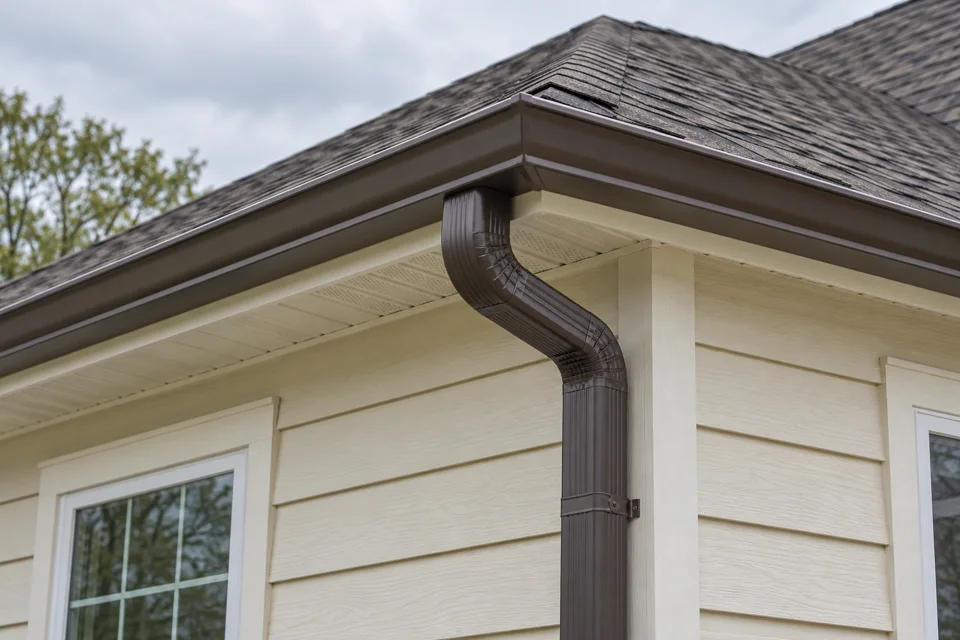
Roof area and water volume
More roof area means more rainwater can reach the gutters. Roof valleys—where adjoining roof sections meet—can concentrate that water into one area.
Capacity means how much water the system can carry. The gutter, its outlets and the downspouts all need to handle the flow; their size and layout work together.
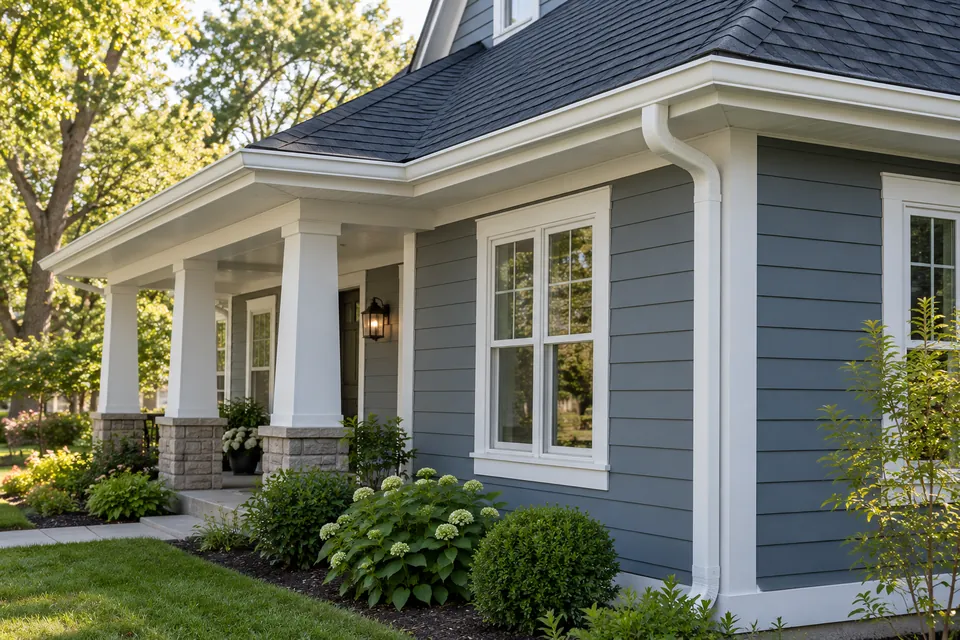
Valleys and concentrated flow
A valley channels runoff from adjoining roof sections toward a smaller part of the gutter. That can create a heavy flow at one corner or along one section.
Compare that concentration with the outlet and downspout layout. Overflow at a valley alone does not prove the whole gutter system is too small.
- Runoff leaves roof planes
- Valley concentrates flow
- Gutter channel receives water
- Outlet passes water to downspout
- Downspout routes water away
- RoofCollecting area
and valleys - GutterChannel, slope
and outlets - DownspoutCapacity
and routing - DischargeA suitable
destination
Outlets and downspouts determine capacity
Capacity decisions should be made with the full water path in view.
| Design factor | Why it matters | What to discuss |
|---|---|---|
| Gutter size | Sets the channel that carries roof runoff. | Whether 5-inch or 6-inch suits the roofline and observed flow. |
| Outlet | Connects the gutter channel to the downspout. | Whether the outlet can pass the flow reaching that section. |
| Downspout routing | Moves water away from the channel. | Where downspouts run, how many there are and where they discharge. |
| Site drainage | Receives water at the discharge point. | Where water is directed after it leaves the downspout and whether that location creates a new problem. |
Swipe across the table to compare all columns →
How 5-inch and 6-inch gutters differ
For the same gutter profile, a 6-inch channel is larger than a 5-inch channel and can carry more water. That added capacity is useful only when enough water can leave through the outlets and downspouts.
Choose between them using the roof area, valley flow and drainage layout. Upsizing may be worth considering for high runoff, but it will not clear a blockage or correct a poor discharge route.
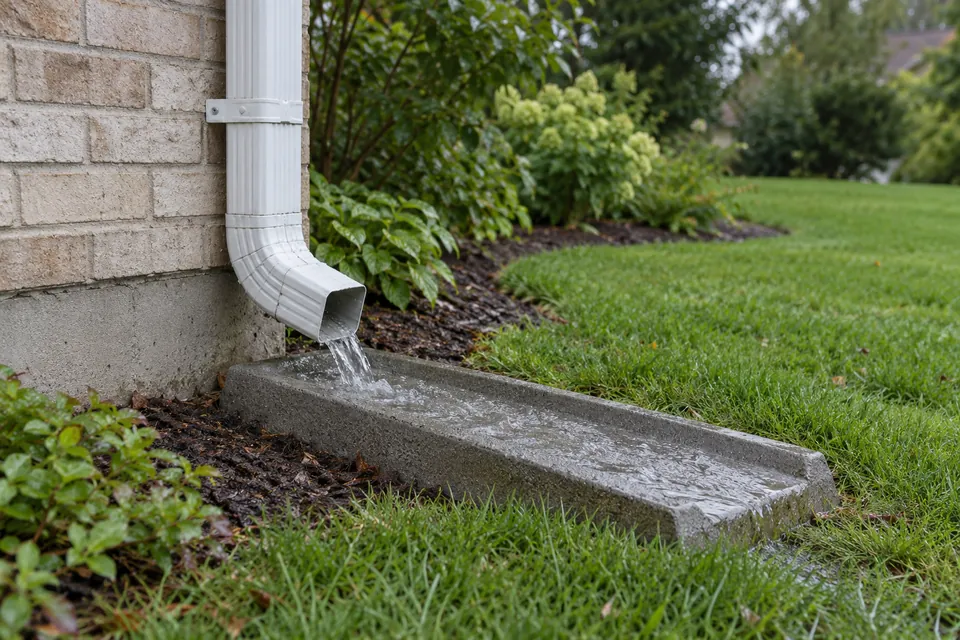
When a larger gutter is worth considering
Ask for the reason behind a proposed size increase. Useful factors include the following, alongside checks for debris, gutter slope and outlet restrictions.
- Roof area that produces a high volume of runoff.
- Valleys or roof shapes that concentrate flow into a section.
- Outlets or downspouts that appear to limit how quickly water leaves the gutter.
- Overflow observed at a specific run, corner or outlet during heavy rain.
- Plans to change rooflines, add roof area or replace related trim.
Common questions
Does a larger gutter always stop overflow?
No. Overflow can come from debris, alignment, outlet limits, downspout routing or capacity. Size is part of the diagnosis.
Can I choose 5-inch or 6-inch from roof area alone?
Roof area is a starting point, but outlets, downspouts, valleys and observed flow should be considered together.
What should I describe when asking about gutter size?
Share the roof shape, where overflow appears, how downspouts are routed and whether recent work changed the roofline.