
Repair work
Gutter repair in Mishawaka
One leaking corner does not automatically mean you need all new gutters. A focused repair may solve the problem when the surrounding system is sound. Start with leaks, sagging sections or loose downspouts at your Mishawaka property.
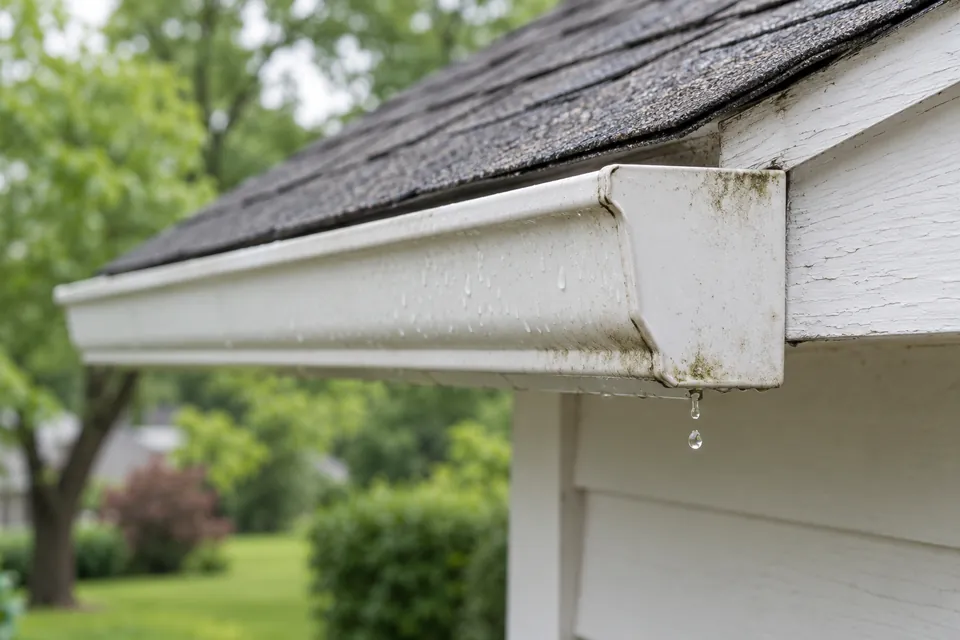
Common repair concerns
A useful repair starts with finding why water leaks or the gutter has moved. Common problems include:
- Leaks at joints, corners or end caps.
- Loose, sagging or detached sections.
- Hangers—the support brackets—or fasteners that have moved.
- Poor slope that leaves water standing in the gutter.
- Leaks where an outlet joins a downspout.
- Separated downspout elbows or connections.
- Damage from a storm or fallen branch.
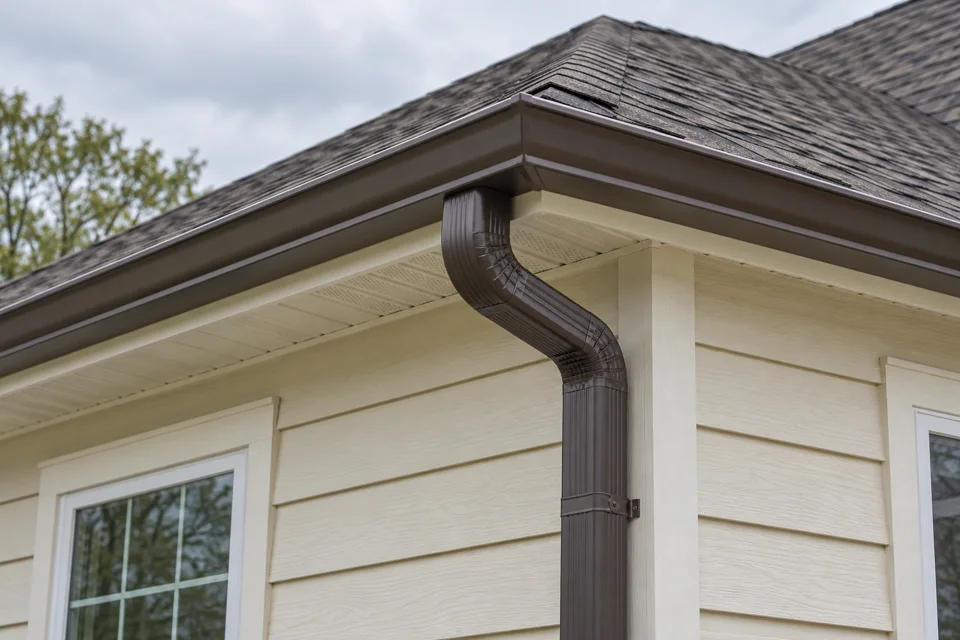
One damaged area or a wider problem?
One symptom does not always mean the whole system needs replacement. Extent and condition guide the choice.
| What you see | May be local repair | May point to wider replacement |
|---|---|---|
| One leaking joint | Reseal or adjust the joint and check nearby fasteners. | If several joints leak along the same run, the channel may be failing. |
| One detached section | Reattach and assess why it moved. | If hangers pull loose in multiple places, the attachments or fascia (the board behind the gutter) may be involved. |
| Water over the front edge | Check for debris or a blocked outlet. | Repeated overflow can indicate capacity or downspout routing concerns. |
| Leak at an inside corner | Repair the corner and check the slope nearby. | Multiple corner failures can suggest movement across the system. |
| Downspout separates at an elbow | Repair the connection or replace the fitting. | Crushed or undersized downspouts may need a larger routing plan. |
Swipe across the table to compare all columns →
Repair options and practical limits
A repair may reseal a joint, adjust a support bracket, replace a fitting or correct a small slope problem. It makes sense when the surrounding gutter and attachment surface are still sound.
If the same fault keeps returning, ask what is causing it and what the proposed repair will address. Include any repair warranty terms in the written estimate.
When to compare repair with replacement
Compare replacement when a repair would leave other failing sections or an unsuitable layout in place. Look for:
- Repeated failures in the same area after prior repairs.
- Widespread damage or movement along multiple runs.
- Capacity concerns during normal rain.
- Mixed materials or fittings that no longer match.
- Fastening or fascia conditions that affect many hangers.

Useful repair details to gather
From ground level, note the location and what happens during rain. If you take photos, keep them for a later estimate conversation; there is no need to climb a ladder or inspect the roof yourself.
- The leak area or stain near the roof edge.
- The detached or sagging section.
- The outlet where the gutter meets the downspout.
- The downspout path to its discharge point.
- Any ground-level sign of where water is collecting.
Common questions
Can a leaking joint be repaired without replacing the run?
Often yes, if the surrounding channel is sound and the cause is local. If nearby joints also leak or the run has moved, replacement may be discussed.
What if the gutter is pulling away from the house?
That can involve hangers, fasteners or the surface they attach to. A repair may reattach the section, but widespread pulling can point to a larger fastening issue.
What details help describe a repair?
Note where the leak or loose section is, what happens during rain, and whether the problem affects one area or several runs.
What should a repair estimate include?
The affected sections, the proposed fix and any parts to be replaced. Ask whether the cause of the problem has been identified, what cleanup is included and what warranty terms apply.