
Guard choices
Choosing gutter guards
The best starting point for gutter guards is what lands on your roof: leaves, needles, seed pods or grit. Compare screen, micro-mesh and curved-hood designs, then check roof fit, cleaning access and written warranty terms.
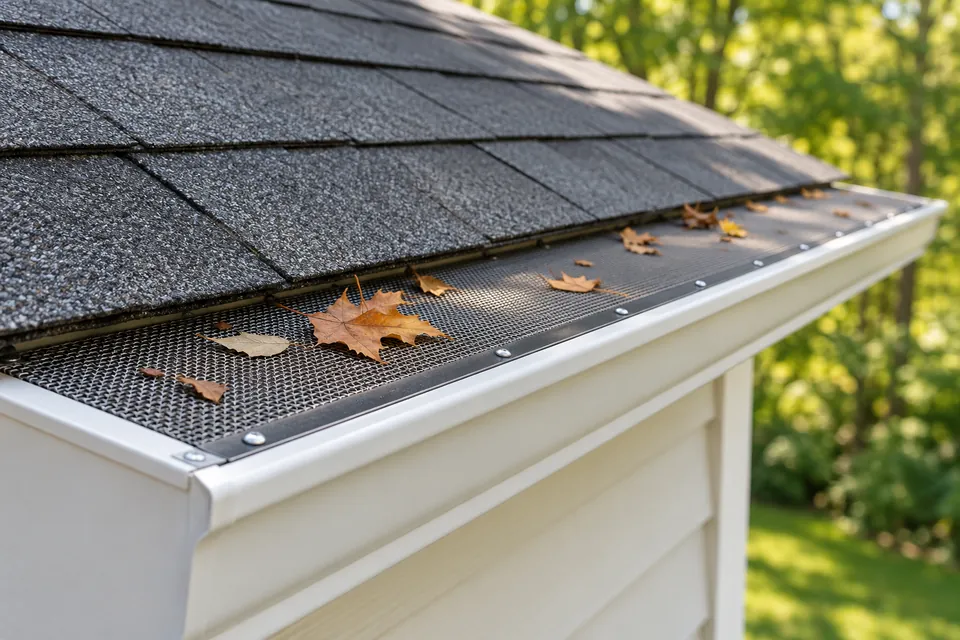
Debris type and roof compatibility
Screen, micro-mesh and curved-hood guards cover or redirect access to the gutter opening in different ways. Compare the design with the debris at your property and the roof edge it must fit.
- Compare the debris present: leaves, needles, seed pods or roof grit.
- Ask about roof material, pitch (steepness), attachment and removal for future service.
- Check the whole water path: gutter channels, outlets (the openings into downspouts) and the downspouts themselves.
| Design | How it is arranged | Questions before choosing |
|---|---|---|
| Perforated screen | A metal panel with openings sits over the gutter. | How does it attach, and how can its surface and the channel be cleaned? |
| Micro-mesh | A fine mesh covers the gutter opening. | Is the mesh compatible with the roof edge, and how is accumulated material removed? |
| Curved hood | A curved cover guides water toward an opening; some systems integrate the hood and gutter. | Does the proposal replace the gutter too, and how can the opening be inspected? |
Swipe across the table to compare all columns →
How will the guards be cleaned?
Plan access before choosing a guard. You should know how surface debris, the channel underneath and the outlets can be reached.
- Ask whether cleaning requires opening or removing the guard.
- Check how the guard is fastened and who can remove it for roof or gutter repairs.
- Discuss safe access for high or hard-to-reach sections.
- From the ground, watch for visible buildup, overflow or loose sections between maintenance visits.

Water flow and overflow
A guard changes how water and debris interact at the gutter opening. It can affect flow into the channel and how overflow appears during heavy rain.
Compare the guard with gutter size, how much water the outlets can pass and where the downspouts lead. Debris, gutter slope and blocked outlets may still need attention.
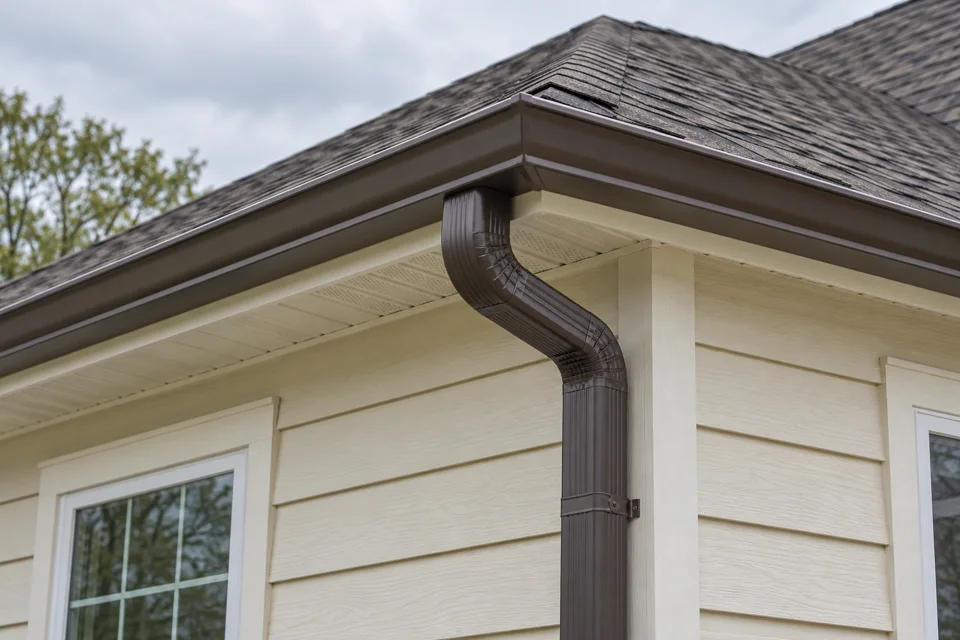
Product warranty questions
Ask for written product terms rather than relying on an assumed warranty.
- What does the product warranty cover, and what maintenance is required?
- How is the guard fastened to the gutter or roof edge?
- Is the guard compatible with the roof material and pitch at this address?
- How is cleaning or removal handled if service is needed later?
- Are there written terms for finish, fastening and performance claims?
Gutter guards and ice dams
Ice dams relate to roof temperatures, snow cover and freezing conditions. Gutter guards do not address the roof heat loss that contributes to ice dams.
If ice dams are a concern, discuss roof heat loss, ventilation and drainage with qualified professionals.
Common questions
Can guards be fitted to existing gutters?
Compatibility depends on the gutter profile, condition and roof edge. Ask whether the proposal keeps the existing gutter, repairs it first or replaces it as part of the guard system.
Do gutter guards prevent ice dams?
No. Ice dams relate to roof temperatures, snow and freezing conditions. Guard products are not a promise against ice dams.
What should I check if the roof may need work later?
Ask how the guard can be removed and refitted, whether it attaches to the roof edge and how future work affects the product or installation warranty.